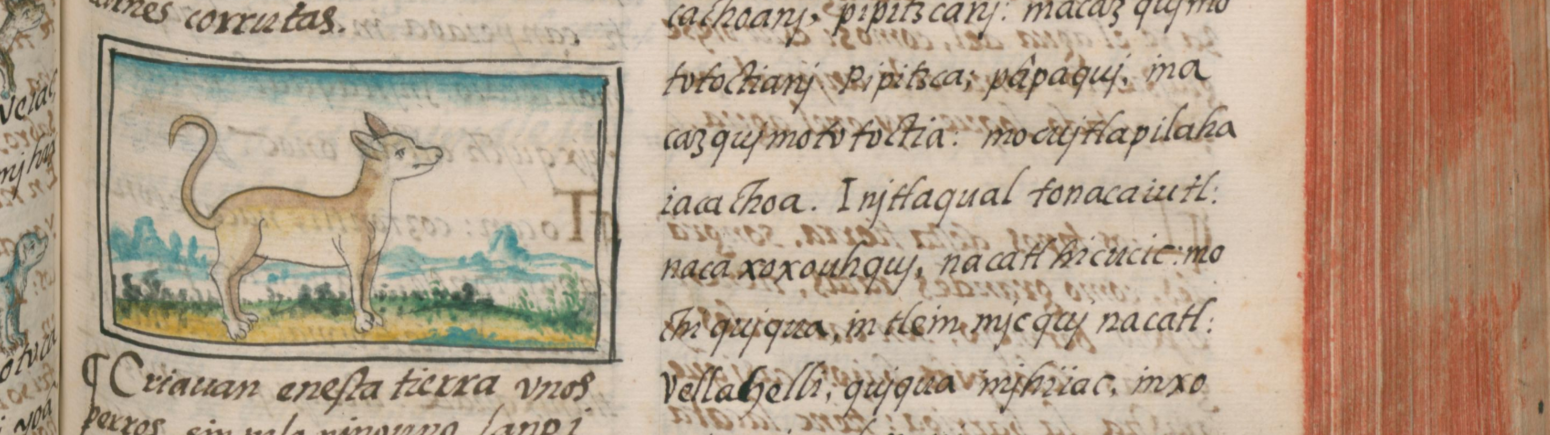
Project Description
This compilation of data on dog remains (Canis lupus familiaris) from Maya archaeological sites was compiled to assist in research on trends in dog use over time and space, and among communities from the Preclassic to Colonial periods (c. 2000 BC - the late 1800s). The data represent a detailed evaluation of published records from the archaeological literature as well as primary datasets contributed by the study authors. Dogs were a vital part of ancient Maya life, but early archaeological studies discussed their use only as dietary resources and sources of teeth for crafting into adornments. These perceptions of the ancient Maya dog were premised in part on the discovery of large collections of dog remains in deposits from the earlier periods of Maya occupation, and ethnohistorical records of the sale of dogs as food in Mexica markets. These led to the assumption that the dog was an important dietary resource during the growth and urbanization of Maya settlements, in an area with no other domesticated mammals to provide meat-on-the-paw. More recent studies suggest more diverse and nuanced roles for dogs, with different breeds perhaps fulfilling several different roles. However, the assumption that early Maya dogs were primarily used as food persists despite the lack of any coherent presentation of the zooarchaeological data from across the ancient Maya world. This database provides that resource. We hope to expand the database to include other dog finds as they are reported in the literature or included by other participants as raw data. To date, the resource has been used as the basis of a book chapter titled "Food, Friend, or Offering: Exploring the Role of Maya Dogs in the Zooarchaeological Record" that explores the role of the dog as food (or not always, as the chapter authors argue).
The database provides raw count data on the number of dog specimens per occupational period at each site (or in some cases in several assemblages analyzed by separate authors for one site), the types of contexts (very broadly defined) within which the remains were recovered, the body region represented (limbs, heads, feet, etc.) and the body side, the proportion of juvenile individuals represented by the elements, and the proportion of remains that were modified by burning, butchering, or artifact manufacture. Metadata regarding each assemblage is provided including, where possible, the total faunal assemblage size analyzed for each site, the name of the analyst and date of analysis, a citation to the location of the published record when the data has come from published data, and to the repository where data is held when raw data is provided.
We welcome comments and additions to this compilation. Such a data compilation is never complete (and never completely accurate). If you are interested in providing data to supplement that found in this project, please contact the lead author, Kitty Emery, at kemery@flmnh.ufl.edu. We also encourage all zooarchaeologists working with Maya fauna to publish that data in open access fora. This data compilation is an example of the type of research that is now possible based on the rich and growing archive of animal-remains research in the Maya area.
Methodological Notes
This data publication presents a comparative analysis of dog remains from across the Maya world, a geographic region broadly conceptualized as everything from the Isthmus of Tehuantepec in Mexico to the vague line running between Copan and the Ulua Valley in Honduras and paralleling the modern political border of Guatemala with Honduras and El Salvador. Temporally, we define “Maya” as including the Preclassic periods but not the Paleoindian or Archaic as it is unclear whether the residents of these early periods would have self-identified with a larger cultural group. There are also so few studies of these early periods that their comparison would be complicated.
Our selected study assemblages include those that are published and/or publicly accessible through the internet, as well as unpublished data that are the intellectual property of the authors, and/or have been approved for use by the original analyst or data curation facility (in situations where the analyst is not known or is no longer available to provide permission). Although we have attempted to be as thorough as possible, this does not represent the full extent of zooarchaeological analyses in the Maya region, since many are not publically available or are in progress, while still others did not provide sufficient detail to allow us to assess dog data.
For the purposes of this study, we define “dog” as members of the subspecies Canis lupus familiaris. We include identifications of Canis sp. and Canidae, unless the analyst has specifically stated that the remains are not those of a dog. In the Maya area, generally the only other member of the Canis species is the grey fox, Urocyon cinereoargenteus, whose elements are much smaller than most dogs and are easily recognized by zooarchaeologists.
We have chosen to provide a chronological overview for some aspects of the study. For these aspects, we provide information only on dated assemblages that fit into broad chronological period categories, including Preclassic, Classic, Postclassic, and Colonial/Historic periods. We recognize that chronologies are not always agreed upon and, in some cases, are not updated. However, we felt it was more important to use chronologies that are published and publicly available than to update or revise the available data. For our overall assessment of dog distributions, we have compared dog specimen counts to overall mammal counts. This is because analyses vary in terms of the inclusion of invertebrates, and because some animal taxa are more subject to decay than others (primarily fish, amphibians, and birds). Thus the comparison to mammals provides the most standard value for comparison among disparate analyses.
Our review includes data on where dog bones were recovered contextually, the types of remains (body portions, side, age), and the treatment of those remains (burning, “butchering” and “artifact manufacture”), in each case to highlight the possible meanings behind the human/dog interaction exemplified by the zooarchaeological remains. Each of these data types also brings with it a certain subjectivity in the analysis and interpretation. One of the most problematic of these data categories is that of context of recovery. To understand the contexts within which dog remains are found, we chose to classify contexts as “political”, which includes those areas that functioned as governing structures or public places, “ritual”, which includes burials, caches, and special function deposits, and “quotidien”, which are all other spaces whether at the household or elite level. In most cases, remains were assigned to a context based on how it was defined in the publication, or information provided by the archaeologist in assemblages identified by the authors.
Although the specific elements, sides, and ages of an animal are fairly objectively assessed, the way we group these also has implications. To examine possible differential use of animal parts, we present body portions as a combined total of elements within that portion. For example, “feet” include all the carpals, tarsals, metapodials, and phalanges of the animal. In our analysis, we present these body portions as a ratio of the number of elements within the portion relative to the expected number that are found in a complete dog body. We used the method described by Reitz and Wing (2008:223–224) to calculate the natural log difference between observed and expected proportions of elements for each time period. Skeletal preservation will naturally differ between skeletal parts, with thin bones such as ulnae and fibulae preserving less frequently than denser humeri and femora. Cranial fragments, with the exception of teeth, are often very poorly preserved so these will naturally be less frequently collected and identified. We have not taken these taphonomic issues into consideration in our evaluation of “expected” distributions but they should be kept in mind for interpretations of the data.
Element body side is also presented as one of our data points. Element body side is presented as the proportion of right or left elements from all side-able elements (not including axial elements or those that could not be sided) for all dogs from the given period. We use this distribution test to document any variation from the standard 50% ratio. The meaning of body sides is well documented among the modern Maya and has been correlated to archaeological iconography (Palka 2002; Brown 2004), suggesting that if dogs were being used in special functions, it is possible that not only the portion of the dog body, but the side of the animal would be important.
Animal age at death is another category of information used to suggest different functions of the animal, either as a source of harvestable food (slaughter at prime ages for meat production [Bökönyi 1969] or for the Maya area [Clutton-Brock and Hammond 1994:824]) or as a ceremonial actor (Thornton and Demarest 2018:12). We do not know at what age dogs might have “tasted best” for the ancient Maya, but in studies of dog butchery in other areas of the world, dogs are ideally slaughtered in their first year of life (e.g., Podberscek 2009). Age of death in zooarchaeological specimens may be determined in a variety of analyses, including dental eruption and tooth wear, closure of cranial sutures and epiphyseal fusion (Reitz and Wing 2008). However, there are few standards for how zooarchaeologists working in the Maya area discern and record age at death. In addition, dogs can be problematic in determining age due to a wide variation in fusion rates for each canine element and for dogs of different types (Sutton et al. 2018). For this study, we record juvenile/immature animals using the information provided by analysts and considering “unfused” as equivalent of juvenile/immature. In this case, it is important to recognize the bias against the youngest age class because unfused and cartilaginous juvenile bones do not preserve well and are often small and harder to find.
In our analysis we have attempted to distinguish between human-made modification marks like cutting and hacking resulting from artifact manufacture as opposed to marks resulting from butchery or skinning. Deep “hack” marks on animal long bones in the Maya area are often the result of removing the epiphyses or diving the shaft for the purposes of crafting a tool, ornament, or other artifact (Emery and Aoyama 2007; Emery 2009, 2010). However, often only vague terminology such as “cut bone” is used in published literature, so it can be unclear whether the cut was from crafting or butchering activities. Thus, in this study we include anything defined by the analyst as “butchery mark” (or similar) as evidence of cutting, skinning, or disarticulation for consumption.
Cut or other modification marks clearly identified as having an association with a finished non-dietary product, such as cutting to make a bone tube, polishing, or carving/incising, are identified as artifactual modifications in this study. Simple or ambiguous descriptions such as “cut mark”, without further information, are identified as butchery in this study, although we acknowledge that these cut marks could easily be evidence for artifact crafting. This study considers drilled stray dog teeth as artifacts, but does not count unmodified teeth as such. We also looked at burned elements. Burned elements have often been cited as evidence of meal preparation, but can also be found as specimens burned as part of discard, or burned as part of other burning events (such as milpa burning or a house fire).
References Cited
Alexander, R.A., Hunter, J.A., Arata, S.A., Martinez, R.C., and Scudder, K.
2013
Archaeofauna at Isla Cilvituk, Campeche, Mexico: Residential Site Structure and Taphonomy in Postclassic Mesoamerica.pp. 281-314 In: The Archaeology of Mesoamerican Animals. Edited by Christopher Gotz and Kitty F. Emery. Lockwood Press. Atlanta GA.
Anderson, Elyse M.
2009
Exploring Maya Ritual Fauna: Caves and the Proposed Link with Contemporary Hunting Ceremonialism. Unpublished Masters Thesis, University of Florida, Gainesville.
Andrews, Anthony P.
1986
La fauna arqueología de El Meco. in A.P. Andrews and F. Robles C. (coord.) Excavaciones arqueologías en El Meco, Quintana Roo, 1977: 67–75. Mexico City: Instituto Nacional de Antropologia e Historia.
Baker, Polydora, Yasui, Cathy and Emery, Kitty F.
2018
Zooarchaeology of Tipu, unpublished data.
Bishop, Katelyn Jo, and Marissa Lynn López
2015
Análisis de Fauna. In Proyecto Arqueológico Holtun. Sitio Arqueológico Holtun, Aldea La Máquina, Flores, Petén. Informe No. 4, Temporada 2014, edited by Brigitte Kovacevich and Karla J. Cardona Caravantes, pp. 156–164. Institute de Antropologia e Historia, Guatemala City.
Blanco, A., Valadez, R. Rodriguez, B.
1999
Colección arqueozoológica de perros del sitio Chac-Mool, Punta Pájaros, Quintana Roo.Arqueología 22: 89-106.
Boileau, Arianne
2013
Maya Exploitation of Animal Resources during the Middle Preclassic Period: an Archaeozoological Analysis from Pacbitun, Belize. Unpublished Master's thesis. Department of Anthropology, Trent University, Peterborough, Canada.
2018
Zooarchaeology of Zacpeten. Unpublished data.
Böyönyi, Sandor
1969
Archaeological Problems and Methods for Recognizing Animal Domestication. In The Domestication and Exploitation of Plants and Animals, edited by Peter J. Ucko and G.W. Dimbleby, pp. 219–229. Aldine, Chicago, IL.
Brady, James.E.
1989
An investigation of Maya ritual cave use with special reference to Naj Tunich, Peten, Guatemala. Unpublished PhD dissertation, University of California, Los Angeles.
Brown, Linda A.
1996
Animal-As-Artifact/Animal-As-Representation: An Exploration of Household and Village Animal Use at the Ceren Site, El Salvador. MA Thesis U Colorado, Denver.
2004
Dangerous places and wild spaces: creating meaning with materials and space at contemporary Maya shrines on El Duende Mountain. Journal of Archaeological Method and Theory 11(1):31–58.
Brown, M.Kathryn
2008
Establishing Hierarchies in the Middle Preclassic Belize River Valley. In: Research Reports in Belizean Archaeology Volume 5, Edited by John Morris, Sherilyne Jones, Jaime Awe, and Christophe Helmke. Pp.175-183. Institute of Archaeology NICH
Belmopan, Belize.
Burke, Chrissina C., Gavin B. Wisner, Katie K. Tappan, Dylan M. Wilson, and Norbert Stanchly.
2027
Analysis of faunal remains from the Upper Belize River Valley sites of Baking Pot, Cahal Pech, Lower Dover, and Xunantunich. In The Belize Valley Reconnaissance Project: a report of the 2016 field season, edited by Claire E. Ebert, Chrissina C. Burke, Jaime J. Awe, and Julie A. Hoggarth, Volume 22:pp. 407–438. Institute of Archaeology, Baylor University, Waco, TX.
Bush, Dominic
2018
Animal Use at the Last Maya Kingdom: A Preliminary Analysis of the Faunal Record from Flores Guatemala. Unpublished MA Thesis, Washington State University.
Carr, H.Sorayya
1986
Faunal Utilization in a Late Preclassic Maya Community at Cerros, Belize. Unpublished PhD Dissertation, Tulane University, New Orleans LO.
1987
Preliminary analysis of nonmolluscan faunal remains from Isla Cerritos, Yucatan. Informe inédito, Facultad de Ciencias Antropológicas, Universidad Autónoma de Yucatan, Mérida, Yucatan.
Carr, H.Sorayya and Fradkin, Arlene
2008
Animal resource use in ecological and economic context at Formative Period Cuello, Belize. Quaternary International, 191(1), pp.144-153.
Clowery, Sara
2005
What’s on the Menu? Faunal Resource Exploitation and Utilization in Late Classic Royal Feasting at the Buenavista del Cayo Palace, Belize. Unpublished Master's thesis, Department of Anthropology, San Diego State University.
Clutton-Brock, Juliet, and Norman Hammond
1994
Hot dogs: comestible canids in Preclassic Maya culture at Cuello, Belize. Journal of Archaeological Science 21:819–826.
Coe, Michael D. and Flannery, Kent V.
1967
Early Cultures and Human Ecology in South Coastal Guatemala. Smithsonian Institution Contributions to Anthropology, no. 3. Washington, D.C.: Smithsonian Institution Press.
Colby, Susan
1988
An Analysis of Faunal Remains from Yarumela, Honduras. Journal of New World Archaeology 7(2-3):71-94.
Cunningham-Smith, Petra
2018
Zooarchaeology of Marco Gonzalez, Belize Unpublished data.
2018
Zooarchaeology of San Pedro, Belize. Unpublished data.
deFrance, Susan D. and Hanson, C.A.
2008
Labor, Population Movement, and Food in Sixteenth Century Ek Balam, Yucatan. Latin American Antiquity 19(3): 299-316.
Emery, Kitty F.
2009
Perspectives on ancient Maya bone crafting from a Classic period bone-artifact manufacturing assemblage. Journal of Anthropological Archaeology 28(4):458–470.
2010
Dietary, Environmental, and Societal Implications of Ancient Maya Animal Use in the Petexbatun: A Zooarchaeological Perspective on Collapse. Vanderbilt Institute of Mesoamerican Archaeology 5. Vanderbilt University Press, Nashville, TN.
2018
Zooarchaeology of Aguateca. Unpublished data.
2018
Zooarchaeology of Petexbatun Polity, Guatemala Unpublished data.
2018
Zooarchaeology of Piedras Negras, Guatemala. Unpublished data.
2018
Zooarchaeology of Urias, Guatemala. Unpublished data.
Emery, Kitty F., and Kazuo Aoyama
2007
Bone, shell, and lithic evidence for crafting in elite Maya households at Aguateca, Guatemala. Ancient Mesoamerica 18(1):69–89.
Emery, Kitty F., and Polydora Baker
2014
Vertebrate animal remains from Classic Period Pacbitun. In Zooarchaeology of the Ancient Maya Centre of Pacbitun (Belize), edited by Paul F. Healy and Kitty F. Emery, pp. 34–55. Trent University Department of Anthropology Occasional Papers in Anthropology No. 16, Peterborough.
Emery, Kitty F. and Erin Kennedy Thornton
2018
Zooarchaeology of Aguacatal, Guatemala Unpublished data.
2018
Zooarchaeology of Chakokot, Guatemala. Unpublished data.
Ferguson, Josalyn M., Oland, Maxine H., and Marilyn Masson
2003
Belize Postclassic Project 2002: Investigation of the Shore Settlements of Progresso Lagoon, and San Esteven: Report to the Department of Archaeology, Belmopan,
Belize.pp 166-168. Institute of Mesoamerican Studies Occasional Publication No. 9 University of Albany SUNY, New York.
Florida Museum of Natural History, Environmental Archaeology Program
2018
EAP Acc#44, data used with permission.
2018
EAP Acc#79, data used with permission.
2018
EAP Acc#165A, data used with permission.
2018
EAP Acc#311, data used with permission.
2018
EAP Acc#646, data used with permission.
Fridberg Diana N.
2015
Case Studies in Ancient Maya Human-Animal Relations: El Peru, La Corona, and Commensal Mammals. Unpublished Ph.D. Dissertation. Washington University. St.
Louis.
Flannery, Kent V., and Mudar, Karen
1991
Feature 6 of Aquiles Serdan. Report on file in Dept. of Anthropology and Sociology, University of British Columbia.
Friewald, Carolyn.R.
2010
Dietary Diversity in the Upper Belize River Valley: A Zooarchaeological and Isotopic Perspective. Research Reports in Belizean Archaeology, Vol. 9. Pp.89-100.
Garber, J.F, Brown, M.K., Driver, W.D.,Glassman, D.M.,Hartman, C.J., Reilly III, F.K. and
Sullivan, L.A.
2004
Archaeological Investigations at Blackman Eddy. In: The Ancient Maya of the Belize Valley: Half a Century of Archaeological Research. pp.48-85. University Press of Florida, Gainesville, FL.
Gotz, Christopher
2005
El consumo de vertebrados en tres grupos habitacionales de Siho, Yucatan. In XVIII Simposio de Investigaciones Arqueológicas en Guatemala, Guatemala, pp. 1–18.
Asociación Tikal, Guatemala City.
2008
Coastal and inland patterns of faunal exploitation in the prehispanic northern Maya lowlands. Quaternary International 191:154–16.
2010
Appendix I: The Faunal Materials from Yaxuna, Yucatan, Mexico. In Archaeological Investigations at Yaxuna, 1986-1996: Results of the Selz Foundation Yaxuna Project. Edited by Travis W. Stanton, David A. Freidel, Charles K. Suhler, Traci Arden, James N. Ambrosino, Justine M. Shaw, and Sharon Bennett, pp. 267–284. BAR International Series 2056, Oxford.
2016
El aprovechamiento de los animales vertebrados por los mayas de las tierras bajas del norte durante el Clásico y Postclásico. Informe Final, presentado al Consejo de Arqueología del Instituto Nacional de Antropoloía e Historia. Ciudad Mexico, Mexico.
Gotz, Christopher M. and Sierra, Thelma
2011
La Archaeofauna de Xcambo, Yucatan, Mexico. Antipoda Rev. Antropol. Arqueol. No. 13. Bogota. 119-145.
Gotz, Christopher M., and Travis W. Stanton
2013
The Use of Animals by the Pre-Hispanic Maya of the Northern Lowlands. In: The Archaeology of Mesoamerican Animals, edited by Christopher M. Gotz and Kitty F. Emery, pp. 191–232. Lockwood Press, Atlanta, GA.
Graham, Elizabeth
1994
Highlands of the Lowlands: Environment and Archaeology in the Stann Creek District, Belize, Central America. Monographs in World Archaeology #19. Royal Ontario
Museum, Toronto CA.
Hamblin, Nancy
1984
Animal Use by the Cozumel Maya. University of Arizona Press. Tucson.
Harrison-Buck, Eleanor, McAnany, Patricia A., and Storey, Rebecca.
2007
Empowered and Disempowered During the Late to Terminal Classic Transition: Maya Burial and Termination Rituals in the Sibun Valley, Belize. In: New Perspectives on Human Sacrifice and Ritual Body Treatments in Ancient Maya Society. Edited by Vera Tiesler and Andrea Cucina. pp. 75-191. Springer Science and Business Media NY.
Henderson, John S. and Rosemary Joyce
2004
A Preliminary Report from the Lower Ulúa Valley. Maya Zooarchaeology: New Directions in Method and Theory. Edited by Kitty F. Emery. pp.223-236. Institute of Archaeology, UCLA Press, Los Angeles.
Hopkins Mary R.
1992
Mammalian Remains. In: Artifacts from the Cenote of Sacrifice, Chichen Itza, Yucatan. Vol. 10 Edited by Clemency Collins. pp. 369-385 Peabody Museum of Archaeology.
Houk, B., Kelley, K., Sandrock, D., and Herndon,K.
2014
The Chan Chich Archaeological Project and Belize Estates Archaeological Survey Team, 2013 Season. Research Reports in Belizean Archaeology Vol. 11, pp. 327-336. Institute of Archaeology, NICH, Belize.
Kavountzis, Erol
2009
Evaluating Cave Use through Spatial Analysis of Animal Remains From Maya Caves in Guatemala and Belize. Unpublished Master’s Thesis, University of Florida, Gainesville, FL.; Anderson, Elyse M. 2009 Exploring Maya Ritual Fauna: Caves and the Proposed
Link with Contemporary Hunting Ceremonialism. Unpublished Masters Thesis,
University of Florida, Gainesville.
Kavountzis, Erol and Emery Kitty F.
2018
Unpublished data, curated with the authors
Kavountzis, Erol
2009
Evaluating Cave Use through Spatial Analysis of Animal Remains From Maya Caves in Guatemala and Belize. Unpublished Master’s Thesis, University of Florida, Gainesville, FL.
Kay, Michael and Emery, Kitty F.
2018
Zooarchaeology of Chiquiuitan. Unpublished data.
Koželsky, Kristin L
2005
Identifying Social Drama in the Maya Region: Fauna from the Lagartero Basurero, Chiapas, Mexico. Unpublished Master’s Thesis, Florida State University, Tallahassee.
Lee-Whiting, Thomas A.
1969
The Artifacts of Chiapa de Corzo, Chiapas, Mexico. Papers of the New World Archaeological Foundation. Utah.
Masson, Marilyn A.
1993
Changes in Maya Community Organization from the Classic to Postclassic Periods: A View from Laguna de On, Belize. Unpublished Ph.D. Dissertation, The University of Texas at Austin, Austin.
Masson, Marilyn A.
2004
Fauna Exploitation from the Preclassic to the Postclassic Periods at Maya Communities in Northern Belize. In Maya Zooarchaeology: New Directions in Method and Theory, edited by K.F. Emery, pp. 97–122. Institute of Archaeology, UCLA Press, Los Angeles.
Masson, Marilyn A. and Peraza Lope
2008
Animal Use at the Postclassic Maya Center of Mayapan. Quarternary International 191(1) pp 170-183.
Mayfield, T. D.
2015
The Nineteenth-Century British Plantation Settlement at lamanai, Belize (1837-1868). Unpublished PhD Dissertation University of Arizona.
McKillop, Heather
1980
Moho Cay, Belize: Preliminary Investigations of Trade, Settlement and Marine Resource Exploitation. Unpublished MA Thesis, Trent University.
Moholy-Nagy, Hattula
2008
The Artifacts of Tikal-Ornamental and Ceremonial Artifacts and Unworked Material. Tikal Museum Monographs, Tikal Report 27A. The University Museum, University of Pennsylvania, Philadelphia PA.
Montero Lopez, Coral
2011
From Ritual to Refuse:Faunal Exploitation by the Elite of Chinikiha, Chiapas, During the Late Classic Period. Unpublished PhD Dissertation. La Trobe University. Victoria, Australia.
Morandi, Steven J
2010
The Archaeology of an Early Spanish Colonial Frontier in Southeastern Yucatan. Unpublished Ph.D. Dissertation, Boston University, Boston MA.
Morgan, Molly
2010
Fixing Space: Formative Period Place Making at Chiquiuitan, Guatemala. Unpublished Ph.D. Dissertation, Vanderbilt University, TN.
Morton June
1988
Appendix IV A Preliminary Report on the Faunal Remains from Santa Rita Corazol, Belize. Postclassic Perspective: Excavations at the Maya Site of Santa Rita Corazol, Belize. Edited by Arlen and Diane Chase. pp.118-122. PARI Monograph #4. San Francisco, CA.
Newman, Sarah E.
2015
Rethinking Refuse: A History of Maya Trash. Unpublished PhD dissertation, Brown University, RI.
2018
Rubbish, Reuse and Ritual at the Ancient Maya Site of El Zotz, Guatemala. Journal of Archaeological Method and Theory pp. 1-38.
Oland, Maxine H. and Masson, Marilyn
2005
Late Postclassic-Colonial Period Maya Settlement on the West Shore of Progresso Lagoon. Research Reports in Belizean Archaeology Vol. 2. pp 225-230 Institute of
Archaeology, NICH, Belize.
Palka, Joel W.
2002
Left/right symbolism and the body in ancient Maya iconography and culture. Latin American Antiquity 13(4):419–443.
Pendergast, David.M.
1969
The Prehistory of Actun Balam, British Honduras. Art and Archaeology Occasional Papers No, 16. Royal Ontario Museum, Toronto.
1971
Excavations at Eduardo Quiroz Cave, British Honduras (Belize) with Analysis of Faunal Material by Howard G. Savage. Royal Ontario Museum. Toronto.
1974
Excavations at Actun Polbiche, Belize. Archaeology Monograph 1 Royal Ontario Museum, Toronto.
1979
Excavations at Altun Ha, Belize, 1964-1970. Royal Ontario Museum, Toronto.
Peterson, Polly Ann
2006
Ancient Maya Ritual Cave Use in the Sibun Valley, Belize. PhD dissertation, Dept. of Archaeology, Boston University.
Podberscek, Anthony L.
2009
Good to pet and eat: the keeping and consuming of dogs and cats in South Korea. Journal of Social Issues 65(3):615–632.
Pohl, Mary D.
1976
The Ethnozoology of the Maya: An Analysis of Faunal Remains from Five Sites in Peten, Guatemala. Unpublished Ph.D Dissertation, Harvard University.
Cambridge.
1990
The Ethnozoology of the Maya: Faunal Remains from Five Sites in the Peten, Guatemala. In Excavations at Seibal, Guatemala, edited by G.R. Willey, pp 144-174. Peabody Museum Monographs, vol. 18, no.3. Cambridge, MA Harvard University.
Pollock H.E.D and Ray C.E.
1957
Notes on Vertebrate Animal Remains from Mayapan. Carnegie Institution of Washington Current Reports 41: 633-656.
Powis, Terry G, Stanchley, Norbert, White, Christine D., Healy, Paul F.
1999
A Reconstruction of Middle Preclassic Maya Subsistence Economy at Cahal Pech Belize. Antiquity 73 (280) 364-376.
Reitz, Elizabeth J., and Elizabeth S. Wing
2008
Zooarchaeology, 2nd ed. Cambridge Manuals in Archaeology. Cambridge University Press, Cambridge, UK.
Rice, Prudence M., Boileau, Arianne, Cecil, Leslie G., Friewald, Carolyn, Nathan J. Meissner, Timothy W. Pugh, Don S. Rice, and Matthew S. Yacubic.
2018
Zacpeten structure 719: Activities at a contact period popol nah before rapid abandonment. Ancient Mesoamerica 29 (1) pp. 137-155.
Ricketson O.G., and Ricketson, E.B
1937
Uaxactun. Guatemala Group E-1926-1931 Vol 477. Carnegie Institution of Washington.
Rivas, Javier, Gotz, Christopher M., and Ardren, Traci.
2015
Restos arqueofaunísticos de un asentamiento maya prehispánico tierra adentro:
Xuenkal, Yucatán, México. Archeobios 9 (1) Pp. 69-84.
Sharpe, Ashley E.
2011
Beyond Capitals and Kings: A Comparison of Animal Resource Use among Ten Late Classic Maya Sites. Unpublished MA Thesis, University of Florida, Gainesville.
2016
A Zooarchaeological Perspective on the Formation of Maya States. Unpublished Ph.D. Dissertation, University of Florida, Gainesville.
2016
Análisis de huesos faunísticos y conchas de los sitios San Bartolo y Xultun. In Proyecto Arqueológico Regional San Bartolo-Xultun: Informe de Resultados de Investigaciones, Temporada de Campo 2016, edited by William A. Saturno and Boris Beltrán, pp. 543–571. Instituto de Antropología e Historia, Guatemala City.
2018
Zooarchaeology of Ceibal/Seibal. Unpublished data.
2018
Zooarchaeology of Sierra Lacandon. Unpublished data.
Sharpe, Ashley E., and Kitty F. Emery
2015
Differential animal use within three Late Classic Maya States: Implications for Politics
and Trade. Journal of Anthropological Archaeology 40:280–301.
Sharpe, Ashley E., William A. Saturno, and Kitty F. Emery
2014
Shifting Patterns of Maya Social Complexity through Time: Preliminary Zooarchaeological Results from San Bartolo, Guatemala. In: Animals and Inequality in the Ancient World, edited by Sue Ann McCarty and Benjamin Arbuckle, pp. 85–106. University of Colorado Press, Boulder.
Shaw, Leslie C.
1991
The Articulation of Social Inequality and Faunal Resource Use in the Preclassic Community of Colha, Northern Belize. Unpublished PhD Dissertation, Department of Anthropology, University of Massachusetts, Amhurst.
1995
Analysis of Faunal Material from Ek Luum. In Maritime Trade, Settlement and Population on Ambergris Caye, Belize. Edited by J. Garber and T, Guderjan. pp.
175-181. Labrynthos Press, Lancaster CA.
Soto Toral, Heriberto
1998
Estudio Arqueozoológico en la Ciudad Prehispánica Maya de Yaxchilán, Chiapas.
Unpublished B.A. Thesis, Escuela Nacional de Ciencias Biológicas, IPN, México, D. F.
Stanchley, Norbert
2003
Sibun Valley Fauna from Excavations and Caves. In: Between the Gorge and the Estuary: Investigations of the 2001 Season of the Sibun Valley Archaeological Project.
Edited by Patricia A. McAnany, XARP.
2006
A Preliminary Analysis of the Pook's Hill Vertebrate Assemblage. In: The Belize Valley Archaeological Reconnaissance Project: A Report of the 2005 Field Season. Edited by Christophe G.B. Helmke and Jaime J. Awe. Institute of Archaeology, Belmopan, Belize.
2011
A Report on the Baking Pot Faunal Remains 2007-2009 Field Seasons.In: The Belize Valley Archaeological Reconnaissance Project: A Report of the 2010 Field Season
Volume 16. Institute Of Archaeology, Belmopan, Belize C.A.
2013
Preliminary Analysis of the Faunal Remains from Plaza F., Lower Dover Belize: 2012 Field Season. In: The Belize Valley Archaeological Reconnaissance Project: A Report of
the 201 Field Season Volume 19. Edited by Julie Hoggarth and Jaime Awe.pp 233-246. Belmopan, Belize.
2013
A Preliminary Analysis of the Ka-Kabish Faunal Remains. In: Ka'Kabish Archaeological Research Project (KARP) Interim Report on the 2012 Field Season. Edited by Cara
Tremain and Helen Hains. Trent University.
2014
Preclassic Period Vertebrate Animal Resource Use at Pacbitun. In Zooarchaeology of the Ancient Maya Centre of Pacbitun (Belize), pp. 18–33. Occasional Papers in
Anthropology No. 16. Trent University Press, Peterborough.
2016
The Blue Creek Faunal Assemblage. In The Ancient Maya City of Blue Creek, Belize: Wealth, Social Organization and Ritual. Edited by Thomas Guderjan.pp. 199-211. BAR
International Series, United Kingdom.
Stanchly, Norbert and Jaime Awe
2015
Ancient Maya Use of Dog (Canis lupus familiaris): Evidence from the Upper Belize River Valley. Research Reports in Belizean Archaeology 12:227–237.
Stanchly, Norbert, Solis, Wendy and Iannone, Gyles.
2008
Zooarchaeological Investigations at Minanha, Belize: Research Goals, Methods, and Preliminary Results. In: Archaeological Investigations in the North Vaca Plateau, Belize: Progress Report of the Tenth (2008) Field Season. Edited by Gyles Iannone and Scott Macrae.pp. 112-126. Trent University, Peterborough.
Sutton, Lerah K., Jason H. Byrd, and Jason W. Brooks
2018
Age Determination in Dogs and Cats. In Veterinary Forensic Pathology, Volume 2, edited by Jason W. Brooks, pp. 151-163. Springer, New York, NY.
Teeter, Wendy G
2004
Vertebrate Exploitation at Caracol, Belize. In: Maya Zooarchaeology: New Directions in Method and Theory. Edited by Kitty F. Emery.pp. 177-192. Monograph 51. Cotsen Institute of Archaeology, University of California, Los Angeles.
Thornton, Erin Kennedy
2011
Animal Resources in Ancient Maya Economy and Exchange: Zooarchaeological and Isotopic Perspectives. Unpublished PhD Dissertation, University of Florida, Gainesville FL.
2018
Zooarchaeology of Cancuen, Unpublished data.
2018
Zooarchaeology of Motul Polity. Unpublished data.
Thornton, Erin Kennedy and Arthur A. Demarest
2018
Ritual Maya Animal Use in Aquatic Contexts at Cancuen, Guatemala. Ancient Mesoamerica pp. 1-19.
Thornton, Erin K. and Ng, Olivia C
2017
Digital Companion to 'Late Nineteenth and Early Twentieth-Century Animal Use by San Pedro Maya and British Populations at Holotunich, Belize In The Archaeology of Mesoamerican Animals. Christopher M Götz, Kitty F Emery (Eds.). Released: 2017-02-07. Open Context. http://opencontext.org/projects/8ae150fc-50f1-4e60-9dd3-df594b02ddd4 DOI: https://doi.org/10.6078/M7PN93HH
Valadez,R., Blanco, A. Rodriguez, B., and Perez G.
2013
The Dog in the Mexican Zooarchaeological Record. In: The Archaeology of Mesoamerican Animals. pp. 557-583. Lockwood Press, Atlanta GA.
Valdez, Fred
1995
Religion and Iconography of the Preclassic Maya at Rio Azul, Peten, Guatemala. In: Religión y sociedad en el área maya, edited by Carmen Varela Torrecilla, Juan Luis Bonor Villarejo, María Yolanda Fernández Marquínez, pp. 211–218. Mesa Redonda 4. Sociedad Española de Estudios Mayas, Madrid, Spain.
Wake, Thomas A.
2004
A Vertebrate Archaeofauna from the Early Formative Period Site of Paso de la Amada, Chiapas, Mexico. In Maya Zooarchaeology: New Directions in Method and Theory, edited by Kitty F. Emery, pp. 209–222. Cotsen Institute of Archaeology, University of California, Los Angeles.
Willey, Gordon R., William R. Bullard, John B. Glass, James C. Gifford, and Orvillle Elliott
1965
Maya Settlements in the Belize Valley. Peabody Museum of Archaeology and Ethnology
Papers 54. Harvard University, Cambridge MA.
Wing, Elizabeth S.
1975
Vertebrate Faunal Remains. In Excavation of an Early Shell Midden on Isla Cancun
Quintana Roo, Mexico. Edited by E. Wyllys Andrews IV, Michael P. Simmons, Elizabeth
S. Wing and E. Wyllys Andrews V. Middle American Research Institute Publication 31,
Tulane University, Pp. 186-188.
Wing, Elizabeth S., and Pohl, Mary D.
1990
Vertebrate Fauna from San Antonio Rio Hondo, Belize, Operation 2 (North). In Ancient
Maya Wetland Agriculture: Excavations on Albion Island, Northern Belize, edited by Mary
D. Pohl, pp. 187–254. Westview Press, Boulder.
Wing Elizabeth S and Scudder, Sylvia
1991
The Exploitation of Animals. In: Cuello: An Early Maya Community. Edited by N.
Hammond., pp. 84-97. Cambridge University Press, Cambridge UK.
Woodbury, Richard Benjamin and Trik, Aubrey S.
1953
The Ruins of Zacaleu, Guatemala. United Fruit Company.