San Jacinto Archaeofaunas
Database of vertebrate and invertebrate remains from the Archaic period at San Jacinto, Colombia
Project Abstract
Description
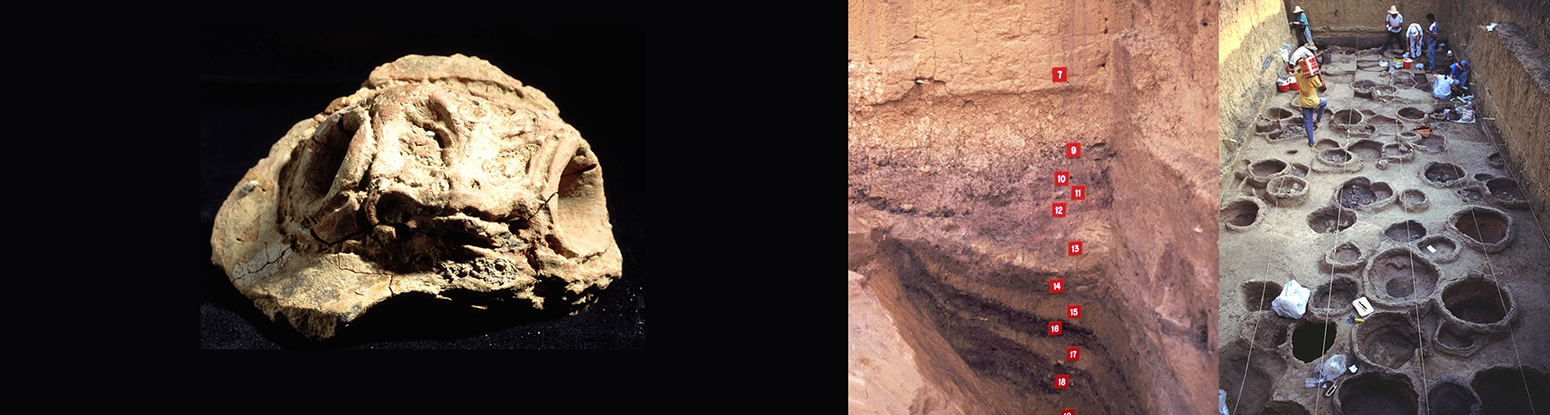
San Jacinto 1 is the older of two sites found near the modern town of the same name, approximately 85 km to the southeast of Cartagena de las Indias, Colombia. Archaeological excavations at San Jacinto 1 uncovered early plant fiber-tempered pottery, mostly fragments of semi-globular and globular pots used for serving fermented drinks, numerous clay-lined earth ovens or fire pits, over two tons of fire cracked rock, and lithic artifacts. The technology suggests that the main cooking activity was focused on processing a wet mush or dry flour from wild grass seeds or rhizomes from C3 plants. The surrounding Sabanas de Bolívar experience strong annual contrasts between dry and wet conditions. Recovered botanical specimens indicate that the site was utilized at the beginning of the dry season in this area of the savannas when these plants are in the process of fruiting and seed dispersal. A total of 1693 vertebrate and 24,522 invertebrate archaeofaunal specimens were recovered from San Jacinto 1, along with a small sample (n=42) of specimens recovered in a test pit from the later occupation contexts at San Jacinto 2.
San Jacinto 1 provides the earliest evidence for fiber-tempered pottery in the western hemisphere. Its occupation represents a special purpose settlement that was used by Late Archaic foraging groups who logistically moved from base camps to special purpose camps in order to collect and process subsistence resources at the onset of the dry season in the Caribbean savannas of northern Colombia. Situated in an optimal location for permanent water and the seasonal concentration of dry season subsistence items, the site’s location was part of a logistic strategy in which consumers were moved to resources during a short season of availability. Preserved vertebrate and invertebrate faunas at San Jacinto conform to expectations about assemblage ubiquity, richness, and evenness or equitability within the early occupational strata at the site. Specific animals including turtles and fish were pursued, and may have been processed with C3 plants and grasses in ubiquitous earth ovens. Certain local aquatic invertebrates were also procured along with extra-local gastropods that were manufactured into beads.
Methodological Notes
Initial auger testing confirmed a total of 26 strata, with strata nine through 20 yielding Archaic materials. Excavation of a 5 by 15 m area involved initial removal of the overburden (strata 1 through 8) followed by the detailed stratigraphic excavation of strata 9 through 26. The stratigraphy in strata 9 through 20 was clearly defined by darker anthropoic soils separated by lighter colored sterile alluvium which had been deposited through the growth of a point bar during the rainy seasons. Some 75 m² of an estimated 346 m² of site deposits were excavated, with 875.66 kg of flotation samples taken from floors and features. Wet season flooding was defined by separate layers of yellowish alluvium in Strata 11, 13, 15 17, and 19. A total of 1,647 non-human vertebrate, excluding a small concentration of non-subsistence-related human bones in stratum 9, and 24,522 invertebrate specimens were recovered in association with the earliest occupations at San Jacinto 1. The vertebrate assemblage is numerically dominated by poorly preserved specimens that could not be reliably identified to zoological class, and a significant amount of reptile fragments. The latter comprises over one half of the assemblage by weight, and consists primarily of fragmented turtle shell. The entire assemblage was studied at the Archaeological Analytical Research Facility (AARF) of Binghamton University with additional identifications undertaken at American Museum of Natural History (AMNH).
Potential Applications
It is very likely that other pottery-bearing sites in this region may yield earlier dates because the end of the area’s preceramic sequence is unknown; however, San Jacinto’s early pottery is important as it appears in association with evidence for seasonal subsistence rounds, social mobility, intensive plant processing, and the scheduled procurement of animal resources. Its high resolution contexts provide us with a unique opportunity to study early human subsistence in an inland savanna and to analyze the circumstances surrounding the origins of food production and early sedentism. Zooarchaeological study of San Jacinto 1 offers a baseline for future investigation.
Support
Excavation and analysis of San Jacinto 1 was made possible through funding awarded to Augusto Oyuela-Caycedo from the National Science Foundation, Heinz Foundation, Tinker Foundation, and the Latin American Center of the University of Pittsburgh.
Related Publications
Oyuela-Caycedo, A., Bonzani, R.M. 2005. San Jacinto 1. A Historical Ecological Approach to an Archaic Site in Colombia. Tuscaloosa: University of Alabama.
Stahl, Peter W. and Augusto Oyuela-Caycedo. 2007. Early Prehistoric Sedentism and Seasonal Animal Exploitation in the Caribbean Lowlands of Colombia. Journal of Anthropological Archaeology 26:329-349.
Current Disposition of the Collection
Upon completion of this study, all materials were repackaged in their original containers with recorded provenience information and returned to Augusto Oyuela-Caycedo.
| Descriptive Attribute | Value(s) |
|---|---|
|
Creator
Vocabulary: DCMI Metadata Terms (Dublin Core Terms) |
Peter W Stahl
Vocabulary: Zooarchaeological Data from the Historic Hacienda El Progreso San Cristóbal Island, Galápagos, Ecuador |
Suggested Citation
Peter W Stahl. (2020) "San Jacinto Archaeofaunas". Released: 2020-09-24. Open Context. <https://opencontext.org/projects/cf6f297f-ada6-404c-801e-9ec094323303> DOI: https://doi.org/10.6078/M7Z899J4
Editorial Status
●●●○○Copyright License

While this content is in the public domain, please appropriately cite the contributors and Open Context